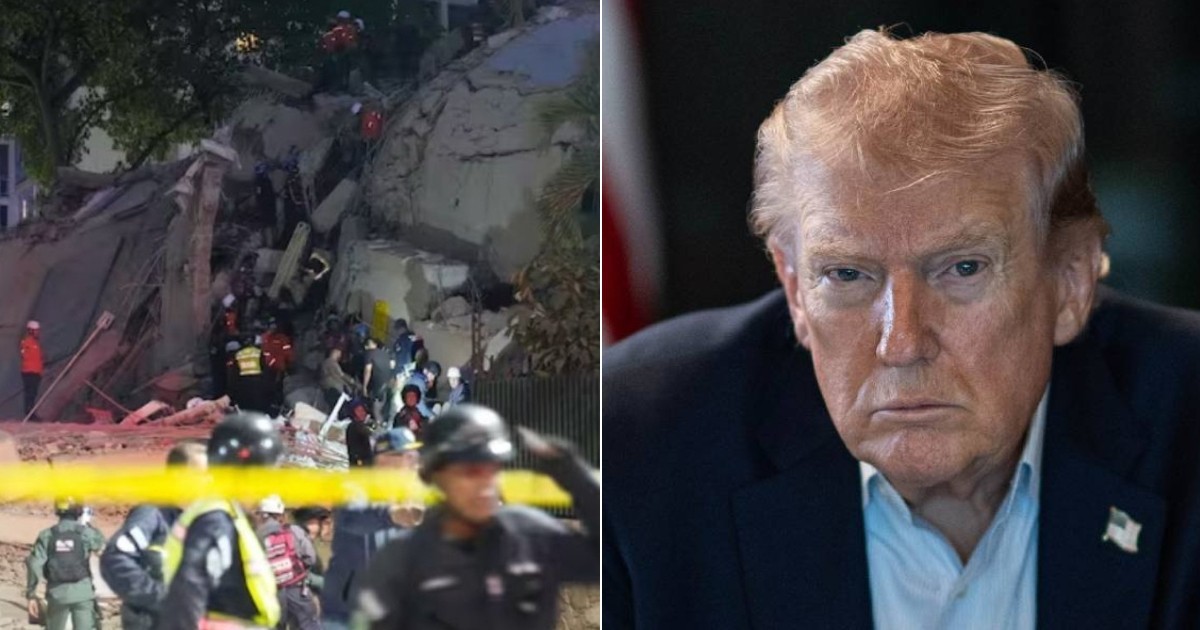
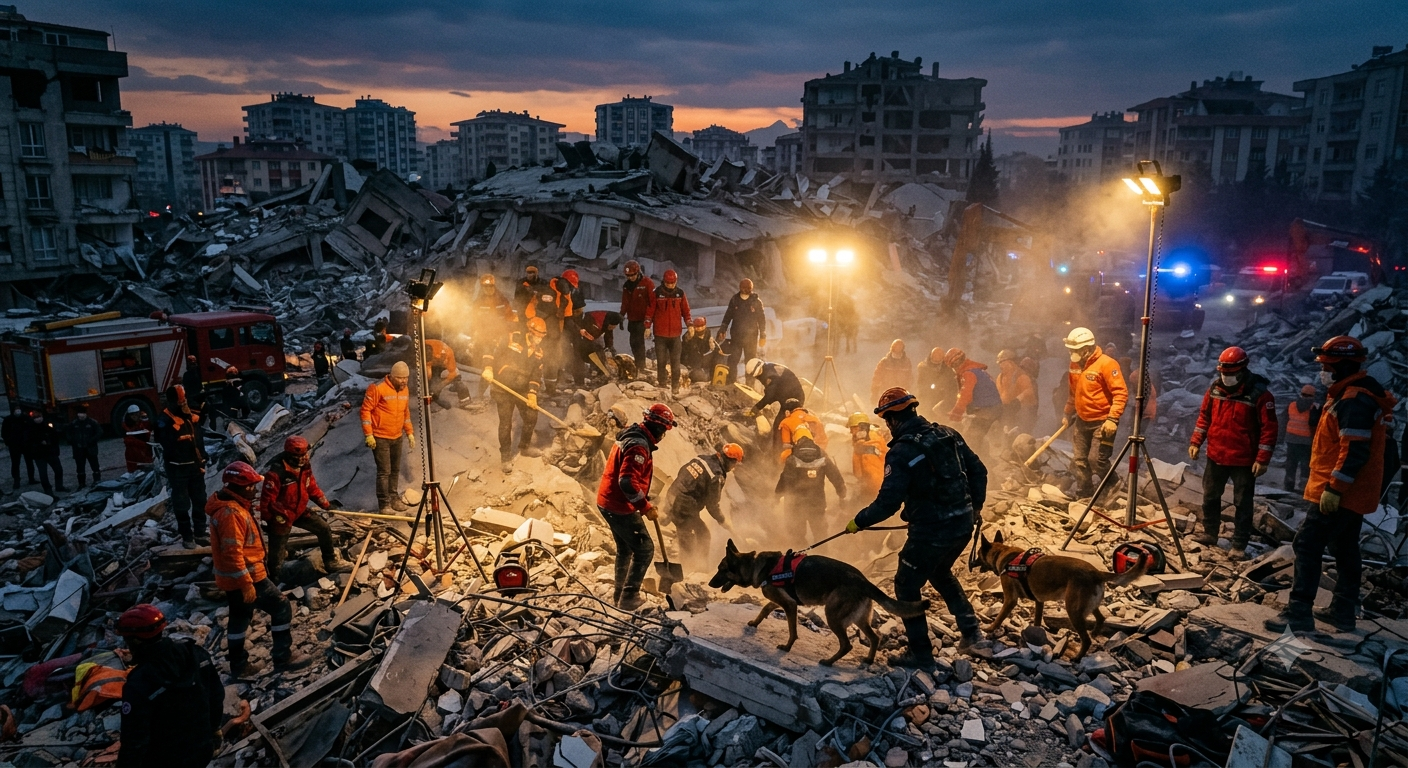
CARACAS — Northern Venezuela is currently the focal point of one of the largest international humanitarian interventions of the decade. Following a catastrophic doublet earthquake sequence that struck the country's north-central region, a massive global coalition of search-and-rescue teams has arrived on the ground. Operating under perilous conditions marked by fractured infrastructure and relentless aftershocks, thousands of international specialists are racing against the clock to locate and extract survivors trapped beneath collapsed high-rises.
The disaster unfolded when a powerful magnitude 7.2 foreshock violently jolted the state of Yaracuy. Merely 39 seconds later, an even more destructive magnitude 7.5 mainshock ripped through the San Sebastián fault system. The combined seismic energy tore through heavily populated urban corridors, causing widespread structural failure in the capital city of Caracas and the coastal state of La Guaira. With the official death toll climbing past 2,200 and tens of thousands reported missing, the Venezuelan government declared a national state of emergency, prompting an immediate wave of international solidarity.
A Global Mobilization of Elite Urban Search and Rescue Units
In the immediate aftermath of the disaster, the United Nations Office for the Coordination of Humanitarian Affairs (OCHA) activated international response protocols, coordinating the deployment of elite Urban Search and Rescue (USAR) teams from more than a dozen nations. These units, certified under the International Search and Rescue Advisory Group (INSARAG) guidelines, bring highly specialized equipment including acoustic listening devices, thermal imaging cameras, and heavy structural breaching tools that are vital for deep-rubble operations.
The United States was among the first to mobilize significant operational assets, with the U.S. State Department announcing a $150 million emergency aid package. On the ground, this response manifests as a multi-agency deployment led by the U.S. Agency for International Development (USAID) alongside premier domestic rescue task forces. These specialized teams have established operational bases in La Guaira, where multi-story residential blocks were reduced to pancakes of concrete and twisted rebar.
The American Deployment: VATF-1 and CA-TF2
Representing the American contingent are two of the world's most experienced disaster response teams: Virginia Task Force 1 (VATF-1) and California Task Force 2 (CA-TF2), the latter operated by the Los Angeles County Fire Department. These units have brought structural engineers, emergency physicians, and canine search teams to navigate the highly unstable ruins.
American task force leaders highlighted the extreme complexity of the structural environment, noting that multiple adjacent buildings are currently leaning into active rescue zones. Despite these severe safety hazards, the American units have already achieved remarkable successes, including the extraction of a mother and her infant child from a collapsed high-rise after more than 30 hours of entrapment.
Regional Neighbors Leading the Immediate Response
Due to geographical proximity, Latin American nations were able to insert rescue personnel into the affected areas within the critical first 48 hours of the disaster. These regional teams have taken over critical sectors in both Caracas and Yaracuy, utilizing their extensive experience in seismic disaster management.
Colombia's National Unit for Disaster Risk Management (UNGRD) rapidly mobilized a comprehensive contingent consisting of over 60 search-and-rescue specialists, four highly trained canine teams, and a dedicated detachment of urban firefighters from the city of Cali. The Colombian teams have been focusing their efforts on compromised commercial districts where hundreds of workers remain unaccounted for.
Mexico and Central American Contingents
Mexico has deployed a massive force of 250 military rescue personnel drawn from the Secretariat of National Defense (SEDENA) and the Mexican Navy (SEMAR). Known globally for their expertise born from domestic seismic challenges, the Mexican units arrived via four military transport aircraft packed with heavy rescue gear, advanced aerial drones, and five specialized search K9s.
Concurrently, El Salvador dispatched a highly efficient contingent of more than 150 rescue workers equipped with extensive medical supplies and structural shoring equipment. Ecuador also answered the call, contributing a specialized team of 46 rescue experts and two tracking dogs from its national emergency services, taking charge of complex structural extractions in northern coastal towns.
The European Union’s Integrated Emergency Bridge
Across the Atlantic, the European Union triggered its Civil Protection Mechanism to orchestrate a unified European response, operating under the collective banner of "Team Europe." This mechanism has facilitated the deployment of over 520 specialized European first responders, complemented by advanced geospatial data from the Copernicus satellite service, which provides real-time mapping of structural deformation to guide ground operations.
Spain’s Ministry of Defense ordered the immediate deployment of the Military Emergencies Unit (Unidad Militar de Emergencias, or UME), sending 57 elite solids specialized in structural collapse rescue, alongside 40 professional firefighters from the Madrid region. The Spanish contingent is also actively working to establish a comprehensive field hospital to alleviate pressure on Venezuela's overwhelmed healthcare grid.
Specialized European Technical Teams
Germany dispatched a highly technical 48-member deployment from the Federal Agency for Technical Relief (Technisches Hilfswerk, or THW). The THW specializes in restoring critical infrastructure, structural stabilization, and heavy lifting operations, ensuring that rescue channels remain safe for entry.
France deployed a specialized search-and-rescue unit comprising military engineers, medical trauma teams, and canine handlers trained to operate in confined spaces. Italy’s Civil Protection Department (Protezione Civile), supported by the national fire service (Vigili del Fuoco), sent an advanced logistics and rescue team, while Switzerland’s Swiss Humanitarian Aid Unit (SHA) landed an 80-person rescue and medical evaluation team directly into the disaster zone.
Asian and Global Support Bolstering Relief Efforts
Exemplifying the truly global nature of the humanitarian response, specialized units from Asia have also arrived on the ground to provide critical medical and recovery support. These teams are filling vital gaps in long-term extrication and emergency field medicine.
Vietnam deployed a specialized rescue and medical task force composed of experts from the Ministry of Public Security and military medical corps. Operating in the Playa Grande sector of La Guaira state, the Vietnamese team has successfully identified and recovered multiple victims while setting up an operational emergency medical station that has already treated dozens of severely injured local residents.
Meanwhile, India has dispatched two Indian Air Force transport planes carrying a fully functional, self-sustaining field hospital along with hundreds of tons of emergency medical supplies, ensuring that survivors extracted from the rubble can receive immediate, life-saving surgical interventions.
What's Next
As the critical 72-hour golden window for finding survivors draws to a close, international operations are gradually shifting from rapid surface searches to highly technical, deep-rubble extractions. Structural engineers from the USAR teams will continue working alongside Venezuelan authorities to assess the stability of hundreds of listing buildings before heavy machinery can be safely deployed to clear debris.
The United Nations is preparing to launch a comprehensive financial appeal to transition from immediate search-and-rescue to long-term humanitarian maintenance, as over 1.8 million people are estimated to be left without access to clean water, electricity, or safe shelter. International aid organizations face a monumental logistical challenge in the coming weeks to prevent the outbreak of waterborne diseases and establish stable temporary housing networks across the devastated north-central states.